Obsidian-shape editor over plain markdown
Open any folder of .md files. Wiki-links, backlinks panel, file tree, full-text search, interactive graph view. Existing Obsidian or Dendron vaults work as-is — frontmatter and tags round-trip cleanly.
A local-first personal research OS for macOS. Obsidian-shape editor over plain markdown + git, with semantic search, Ask-this-vault chat, and AI text reformat. Two surfaces, one vault. Your data never leaves your machine unless you git push.
Notes are the source of truth. The app is just a lens.
Most note-takers eventually realize their tool decides their schema, their export path, and their roadmap. atomos starts the other way around: your vault is plain markdown in a git repo, and that's the contract. The app reads it, writes it, indexes it — and any other app that speaks markdown still works on the same files.
On top of that contract, atomos adds the things research notes have always wanted from a tool: a backlinks panel that's actually fast, a graph view you can read, semantic search that doesn't round-trip your vault to someone else's server, and chat that grounds itself in your own atoms — citations included.
Run it offline against Ollama. Or wire OpenAI. Or both, on different vaults. Keys live on your machine — never in the vault, never in git.
A native Mac window and a local web companion stay in sync. Same vault, same index, same Ask sessions — open either or both.
The desktop and the browser views never drift — they're reading the same notes on disk.
Useful when the Mac window is fullscreen and you want to side-glance the same vault from a browser tab on a second monitor.
┌──────────────────────────┐ ┌──────────────────────────┐
│ Native Mac window │ │ Browser tab │
│ Editor · graph · ask │ │ same UI, in sync │
└──────────────────────────┘ └──────────────────────────┘
│ │
┌────────┴──────────────────────────────────┘
▼
┌────────────────────────────────────────────────────┐
│ atomos │
│ ─────────────────────────────────────────────── │
│ vault · index · embed · chat · agent · git ... │
└────────────────────────────────────────────────────┘
│ │
▼ ▼
┌──────────────────┐ ┌────────────────────┐
│ your vault │ │ local index │
│ *.md + .git │ │ on your machine │
│ (you own this) │ │ (private) │
└──────────────────┘ └────────────────────┘Open any folder of .md files. Wiki-links, backlinks panel, file tree, full-text search, interactive graph view. Existing Obsidian or Dendron vaults work as-is — frontmatter and tags round-trip cleanly.
A local index keyed to your vault, built against any OpenAI-compatible embedding endpoint. Resilient indexer survives a bad batch without aborting the whole run.
Retrieval over the semantic index, then a chat completion against any OpenAI-compatible provider. Answers come back with atom citations you can click through; every turn auto-saves to a per-vault history.
Select text, press ⌘J to rewrite with your default instruction, or ⌘⌥J for a one-off ("translate to Japanese", "summarize in three bullets"). Global Rewrite (⌘⇧Y) works in the active editor anywhere on the system.
Your vault is a git repo. Pull, commit, push from the status bar. Atomos never writes hidden files, sidecars, or its own metadata into a user vault — all app state stays out of your notes.
OpenAI, Anthropic, Gemini, Ollama, vLLM, LM Studio — anything OpenAI-compatible. Keys are stored locally and never written into the vault. Reading and editing work with zero configuration; AI features light up when you wire a provider.
Live-preview markdown with wiki-link autocomplete and the backlinks panel pinned right.
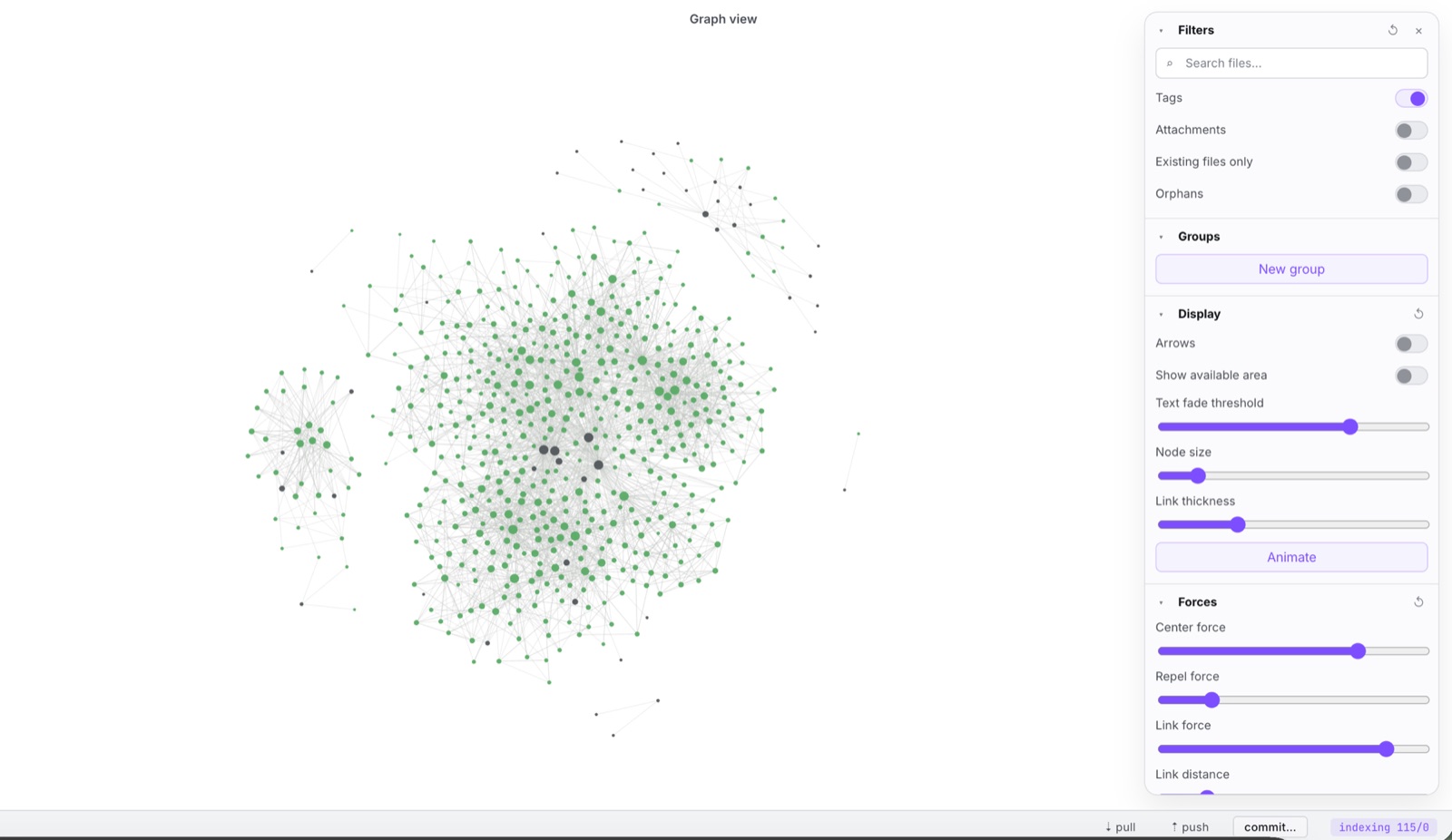
02 · GRAPHForce-directed wiki-link graph over the full vault. Filter by tag, toggle orphans, retune center / repel / link forces — and click a node to open the atom in a new tab.
Top-k retrieval grounded in your vault, with click-through atom citations.
⌘J in any text field — Typeless-style HUD shows the model running in-place.
Editor / Ask / Reformat shots are placeholders; real captures land on the next page bump.
Apple Silicon, 10.2 MB, signed and notarized. Drag to Applications.
Any folder of .md files. Existing Obsidian, Dendron, or plain notes — atomos reads them where they live and never moves them.
Settings → AI Providers. Paste an OpenAI key, point at Ollama on localhost, or both. Without a provider, you still get the editor + graph + git.
Build the per-vault embedding index, then ⌘⇧T to ask, ⌘J to reformat selection, ⌘G for the graph view.
Yes. You bring your own API key for OpenAI / Anthropic / Gemini / Ollama — there is no subscription, and no telemetry from atomos itself other than an opt-out daily heartbeat that ships only an anonymous UUID + app/macOS version.
Yes — atomos only needs a folder of .md files. [[wiki-links]], frontmatter, and tags all round-trip. Obsidian-only features like Canvas and the native plugin store are out of scope.
Wherever you picked the folder to live. atomos never moves files; it reads and writes the markdown you already have. App state and BYOK keys live outside your vault, on your machine only.
Only when you explicitly git push. Embeddings are computed against your configured endpoint — which can be 100% local via Ollama — and cached on your machine, never inside the vault.
A native Mac app plus a local web companion that stay in sync — same vault, same index, same Ask sessions. Side-glance the same notes from a browser tab while the desktop app is open.
Not yet. The current build targets macOS Apple Silicon only.
Built by Shen Huang as daily-driver tooling for semi-analyst research. Same author as orangebot.ai. Source is private for now — feedback and changelog are in a public companion repo.
I built atomos as daily-driver tooling for semi-analyst research — fast iteration through hundreds of files, AI grounded in my own notes, and a vault format I can't get locked out of. It's shipping at v0.6.20 from a public feedback repo. Tell me what to build next at github.com/LichAmnesia/atomos-feedback, or ping @shenhuang on X.